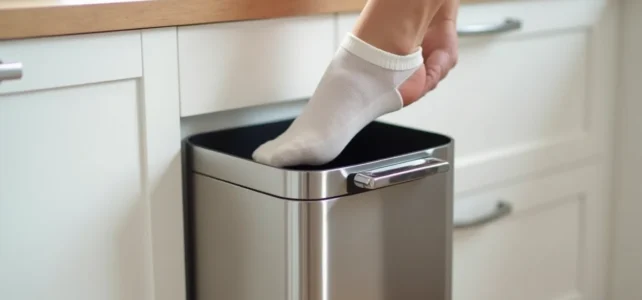
Pressing a pedal to open your trash can may seem trivial. The action lasts less than a second, your hands remain free, and the lid lifts effortlessly. Behind this simplicity lies an opening mechanism that varies depending on the models, materials, and intended use. Understanding how this system works helps you choose the right pedal bin, maintain it properly, and avoid premature breakdowns.
How the pedal lever works inside the bin
The principle is based on a lever arm. When the foot presses the pedal, a rigid rod (made of metal or reinforced plastic) transmits the force upward. This rod pushes the lid by pivoting around a fulcrum point, often a hinge fixed at the back of the bin’s body.
Have you noticed that the lid closes automatically when you release the pedal? That’s the role of a return spring, sometimes replaced by a flexible plastic piece that acts as a spring. This component stores energy when opening, then releases it to close the lid.
Some models offer two positions. A technical manual for a pedal bin describes a movable black piece: placed one way (narrow fin facing up), the lid closes automatically. Turned around (wide fin facing up), the lid remains locked in the open position. This detail changes everything when you need to empty an inner bucket or replace a bag.
To learn more about the opening mechanism of a bin on Maisons Alternatives, each type of connection (straight rod, cable, articulated linkage) is detailed according to the price range.
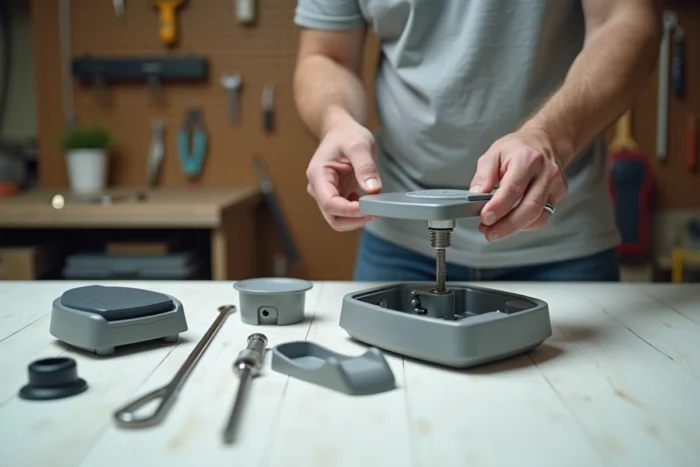
Plastic or stainless steel pedal: how the material affects the mechanism
The choice of material is not just about appearance. It affects the lifespan of the opening mechanism and its resistance to repeated use.
Stainless steel pedal bin
User feedback in communities shows that metal or stainless steel bins withstand frequent openings and closings better. Metal hinges can endure high-temperature washes without deforming. The pedal welded to the frame limits breakage points. For this reason, public tenders increasingly favor reinforced models with removable inner buckets.
Plastic pedal bin
A fully plastic model is cheaper and lighter. However, the transmission rod and hinges are the first elements to wear out. Intensive use (communal kitchen, sorting area) leads to quicker mechanical play. For moderate domestic use, plastic remains a reasonable choice, provided you don’t force the pedal when the lid is stuck.
Never press hard on the pedal if the lid is stuck. This rule appears in most manufacturer manuals. Forcing damages the transmission rod or breaks the pivot point, and repair is rarely possible on an entry-level model.
Pedal bin and hygiene: why contactless makes a difference
Foot opening eliminates hand contact with the lid. In the kitchen, this prevents touching a soiled surface while preparing meals. In a professional or communal context, this point takes on additional significance.
Since the rise in health concerns related to cross-contamination, ranges of pedal bins have been specifically designed for contactless use in communities and public spaces. The goal is to minimize lid handling, especially with food waste.
The AGEC law, which mandates sorting of organic waste at the source starting in 2024, accelerates this movement. Canteens, communal kitchens, and public spaces are equipping themselves with pedal bins rather than manual-opening ones. The reasons are threefold:
- Organic waste generates odors that a closed lid contains better than an open bin
- A lid that closes automatically limits the attraction of pests (flies, rodents)
- Every manual opening multiplies the risks of cross-contamination between the user’s hands and the lid
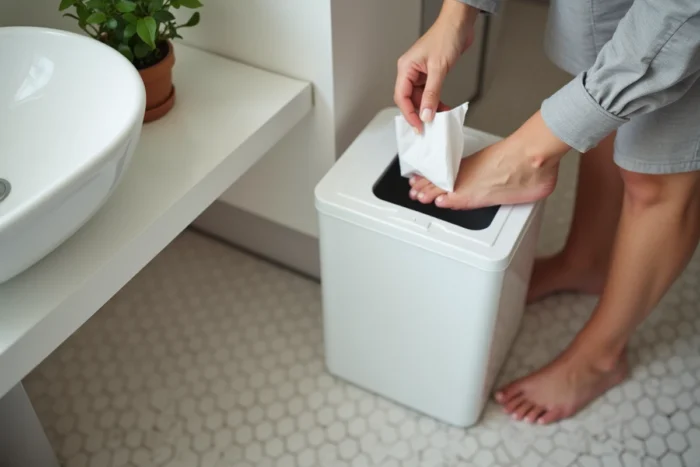
Maintaining the pedal mechanism to avoid common breakdowns
Most breakdowns come from three specific areas: the lid hinge, the return spring, and the point where the pedal attaches to the frame. On a stainless steel model, regular cleaning of the surface with a soft cloth and a suitable stainless steel cleaner is sufficient. Then wipe with a dry cloth to avoid streaks.
For the mechanism itself, periodically check that the transmission rod slides freely. A grain of dust or a food residue stuck in the joint is enough to make the opening jerky. A damp cloth on the moving parts, without soaking or spraying water, prevents this issue.
Here are the points to monitor based on usage frequency:
- Check the play of the pedal every month with intensive use (community, restaurant)
- Ensure that the return spring fully closes the lid, without any residual gap
- Replace the inner bucket as soon as it shows cracks, as a cracked bucket allows juices to leak that corrode the rod
- On models with a movable part, check that the part hasn’t shifted position after a thorough cleaning
Capacity and format: adapting the pedal bin to your space
The pedal mechanism comes in a wide range of capacities. Small models intended for a bathroom operate with a short linkage and a light spring. Large kitchen bins, beyond several dozen liters, require a longer rod and a more powerful spring to lift a heavier lid.
Shape also plays a role. A rectangular model fits against a wall and frees up floor space. A round model pivots more easily if moved frequently. In both cases, the pedal must remain accessible without your foot bumping against a piece of furniture. Allow a clearance of at least the width of a foot in front of the pedal.
The choice between plastic and stainless steel, between small and large formats, primarily depends on the frequency of daily use. A model with metal hinges and a welded pedal remains the best investment as soon as the bin is used multiple times a day in an active kitchen.