Equipping a newborn involves making choices among dozens of product categories, often presented as all being priorities. To gain clarity, comparisons should be made based on measurable criteria: regulatory compliance, actual usage duration, and risks associated with the second-hand market. This article reviews baby equipment from this perspective, relying on recent regulatory developments.
Regulation and Compliance: What Has Changed for Baby Equipment
Several regulatory frameworks have evolved in recent months, directly affecting purchasing criteria. Two changes deserve particular attention.
Since September 1, 2024, the R129/i-Size standard requires choosing a car seat based on the child’s size rather than their age. It strengthens side impact testing and mandates rear-facing installation until at least 15 months. A seat compliant with the old R44 standard remains legal, but it does not meet the same protection requirements.
Connected devices (baby monitors, sleep sensors) are now subject to European privacy requirements effective from August 1, 2025. Data encryption, user account management, and personal information retention policies are among the points to check before purchase. Signal range is no longer sufficient to evaluate a baby monitor.
For more in-depth information, the equipment on Les Petits Pois Sont Rouges details the product categories to consider based on each growth stage.
Comparison Table of Equipment by Usage Duration
The duration for which equipment remains relevant varies significantly. The table below helps prioritize purchases based on their usage profitability.
| Category | Effective Usage | Recommended Second-Hand Purchase? | Points of Caution |
|---|---|---|---|
| Cradle / Bassinet | 3 to 5 months | Yes, under conditions | Check mattress firmness and absence of recalls on RappelConso |
| Crib | Up to 2-3 years | Yes, under conditions | Spacing of slats, stability of fixtures |
| Car Seat (Group 0+) | About 12-15 months | Not recommended | Never reuse a seat that has been in an accident |
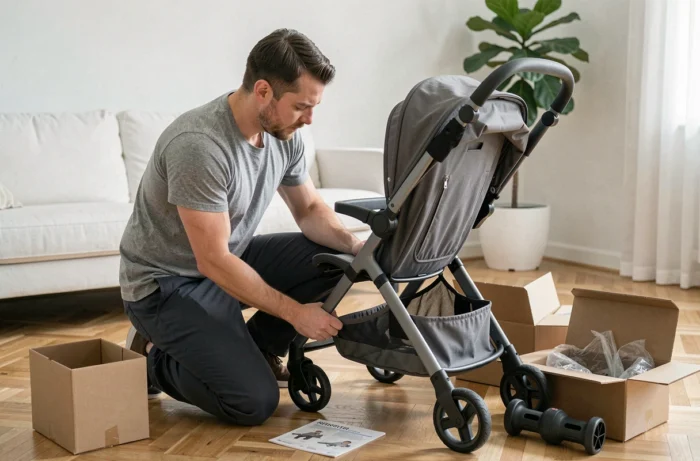
| Stroller | Up to 3-4 years | Yes, under conditions | Condition of brakes, harness, chassis |
| Connected Baby Monitor | 1 to 3 years | Not recommended | Compliance with data protection requirements (August 2025) |
| Bottles / Feeding Accessories | Variable | No | Ban on bisphenol A, check labeling |
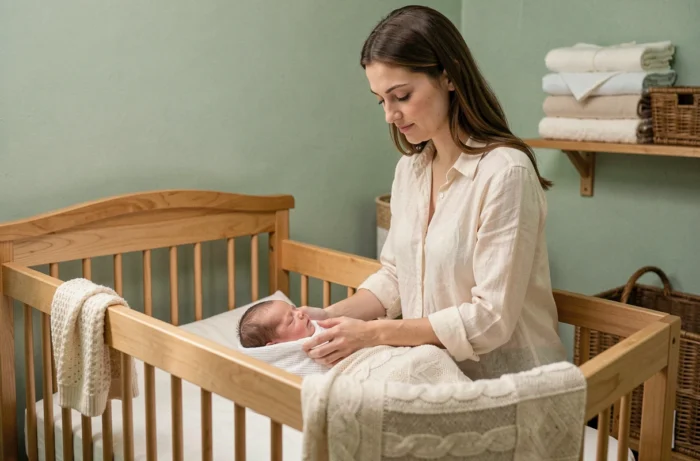
The cradle, despite its short usage duration, remains the first item needed right after leaving the maternity ward. In contrast, the crib offers prolonged use that justifies an investment in a certified quality mattress.
Second-Hand and Product Recalls: Checks Not to Overlook
The second-hand market represents a significant portion of baby product purchases. Not all equipment is suitable for resale under the same safety conditions.
- Transport items (car seats, boosters) that have been in an accident, even minor, lose their protective capacity. The history of a second-hand seat is rarely traceable, making the purchase of a second-hand car seat generally inadvisable.
- Baby mattresses lose their firmness over time. A sagging mattress increases the risk of suffocation for an infant. Check for flatness and absence of depressions before any reuse.
- Electrical products (bottle warmers, sterilizers, night lights) may be subject to recalls. The platform RappelConso allows you to check if a specific model is affected by a market withdrawal.
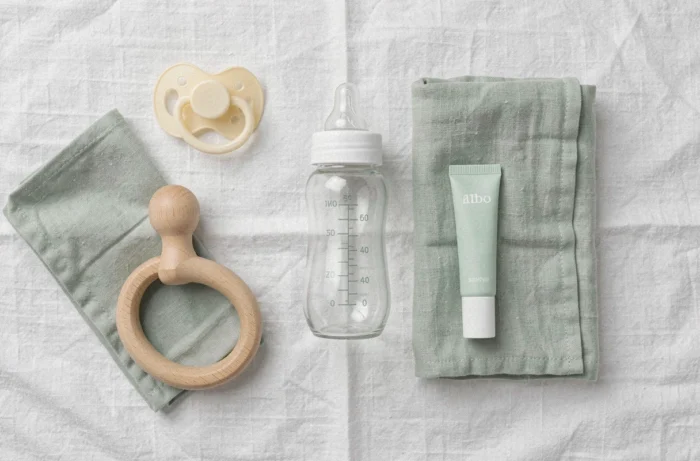
- Bottles and food containers must bear a marking certifying the absence of bisphenol A. The simple marketing claim “BPA-free” does not replace the verification of regulatory compliance marking.
A simple reflex before any second-hand purchase: note the brand and exact reference of the product, then search for it on RappelConso. This step takes a few minutes and eliminates models that have been withdrawn from the market.
Data Security and Connected Baby Monitors: An Often Overlooked Angle
Wi-Fi connected video baby monitors handle image streams and sometimes location data. Since August 2025, these devices must comply with specific European requirements.
The points to examine before purchase are no longer limited to classic technical specifications (range, battery life, image quality). Video stream encryption and data retention policy have become essential selection criteria. A baby monitor that stores recordings on a remote server without encryption exposes the household’s privacy.
Firmware updates also matter. A device that no longer receives security patches from the manufacturer becomes vulnerable. For a second-hand purchase, checking that the manufacturer still supports the model in question is a minimal precaution.
Selection Criteria for a Compliant Baby Monitor
The connection protocol (Wi-Fi vs. local radio frequency) determines the level of exposure to digital risks. An analog baby monitor operating on a local frequency does not process any personal data in the regulatory sense, simplifying the issue.
For connected models, checking for the existence of a secure user account and the ability to delete data remains the minimum. The absence of these functions should disqualify the product from selection.
Baby equipment stands out from other consumer categories by the speed at which each product becomes obsolete for the growing child. Cross-referencing actual usage duration with the level of risk in the second-hand market helps direct the budget towards the most important items, particularly the car seat and sleeping arrangements. The regulatory developments of 2024 and 2025 add a layer of verification that traditional shopping lists do not yet incorporate.