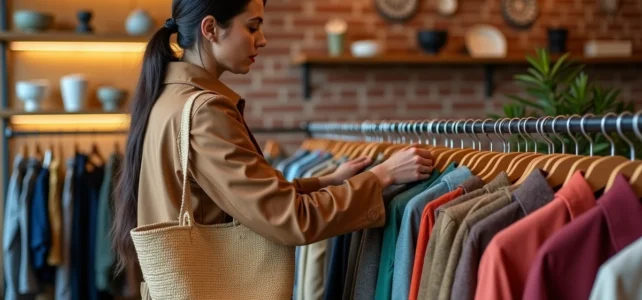
The gift and trendy find market has become fragmented. Between saturated generalist platforms filled with standardized products, concept stores multiplying exclusive collaborations, and creator markets gaining ground, the usual shopping benchmarks no longer work as well. Identifying a truly original shopping idea requires understanding where the difference lies today, and especially what distinguishes a sustainable find from a quickly forgotten impulse purchase.
Verified handmade or disguised dropshipping: the true filter for original shopping
The promise of an artisanal or handmade product has become an omnipresent selling point. On major international platforms, shops reselling items from dropshipping coexist with genuine artisans, with no visible distinction for the hurried buyer.
French alternatives like Un Grand Marché have built their positioning on a quality charter with controlled artisans, allowing for the real origin of each product to be verified. The principle is simple: each seller must prove that they make or transform what they offer themselves.
For those who regularly explore shopping on Camille Un Point C’est Tout, this type of editorial selection is part of the reflexes that prevent disappointments. Filtering by country of manufacture, reading detailed reviews, and prioritizing shops that are transparent about their raw materials remains the most reliable way to uncover finds that live up to their promises.
- Check if the platform imposes a manufacturing charter on sellers (and not just general sales conditions)
- Prefer product listings that detail materials, place of manufacture, and production time
- Beware of abnormally low prices on items presented as artisanal, often an indicator of industrial resale
Ethical fashion and trendy finds: the end of an artificial opposition
The ethical gift and the stylish gift have long been placed in two separate aisles. This distinction has lost its relevance as committed brands have caught up with their design.
Brands like WeDressFair, 1083, or Hindbag now combine sharp selection, eco-friendly materials, and premium design. The result: fashion pieces or accessories that have nothing to envy from conventional brands in terms of aesthetics, while ensuring complete traceability.
Parisian concept stores specializing in Made in France illustrate this convergence well. They offer clothing, stationery, leather goods, or cosmetics whose positioning relies as much on style as on commitment. For a gift, this changes the game: giving an ethical product no longer means sacrificing the “heartthrob” effect.
What this changes for gift selection
A product from a well-chosen ethical brand tells a story. The recipient receives an item with a clear provenance, often small-batch production, sometimes even the name of the workshop. Originality comes from the rarity of production, not from flashy packaging.
However, not all brands claiming to be “eco-responsible” are equal. The absence of a label or verifiable certification should raise alarms. Labels like GOTS for textiles or Origine France Garantie for manufacturing remain useful benchmarks, provided they are sought on the product listing and not in marketing discourse.
Local experiences and creative workshops: beyond the standard gift box
Experience gift boxes (tasting, cooking workshop, craft initiation) have multiplied in recent years. Their success is based on a simple idea: offering a moment rather than an object. The reality is more nuanced.
A successful creative workshop depends as much on the location and the facilitator as on the concept itself. Some boxes offer memorable experiences, while others are limited to an hour in a characterless venue with a basic kit.
How to distinguish a good experience from a disappointing kit
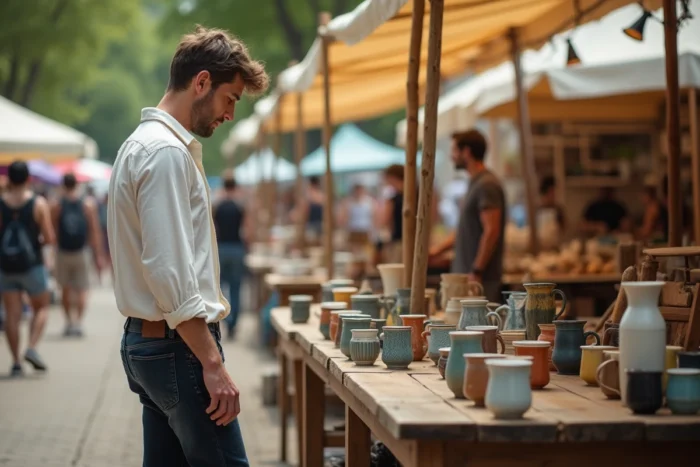
Physical creator markets and live workshops (pottery, bookbinding, natural dyeing) generally offer a better satisfaction rate than prepaid boxes to be used “whenever you want.” The reason lies in the commitment: when you book a specific date in an identified location, the experience is framed.
- Check reviews on the physical location (not just on the gift box platform) to assess the actual quality of the workshop
- Prefer experiences with a limited number of participants, ensuring a richer exchange with the artisan or facilitator
- Compare the price of the box with that of a direct reservation with the workshop, often cheaper and more flexible
Neighborhood selection and independent shops: an underestimated geographical filter
The online shopping reflex overlooks a powerful lever: searching by neighborhood or city. Independent shops, downtown concept stores, and local creator markets offer products that cannot be found on major platforms.
This geographical approach has a concrete advantage for gifts: it guarantees a form of exclusivity. A piece of jewelry bought from a creator in an artisan district, a candle made by a local candlemaker, a wine selected by a neighborhood wine merchant are all finds impossible to duplicate with a generic online search.
The role of the physical location in the perception of the gift
Giving an object while recounting where and how it was found adds a dimension that e-commerce struggles to reproduce. The place of purchase becomes part of the gift’s story. Shops that focus on careful scenography, personalized welcome, and limited editions have understood this well.
The available data does not allow for precise measurement of the satisfaction gap between a purchase in an independent shop and an online purchase. Qualitative feedback suggests that the sensory dimension (touching a fabric, smelling a candle, tasting a product) remains a determining factor in the pleasure of giving as well as receiving.
Original shopping in 2025 is not limited to a list of platforms or a catalog of trends. The quality of a find relies on three concrete filters: verifying the product’s origin, choosing brands where ethics and style coexist without compromise, and rediscovering short geographical circuits.