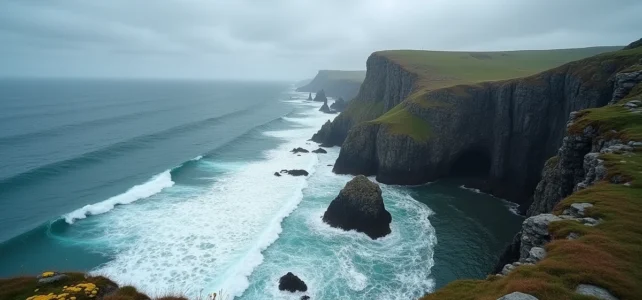
The Breton territory rests on a structuring geographical opposition between Armor (the coastline) and Argoat (the inland), two facets that produce radically different landscapes just a few dozen kilometers apart. This duality, often reduced to a tourist slogan, conditions the geology, vegetation, and local uses far more than one perceives from a beach parking lot.
Breton Landscapes on Foot or by Kayak: What Speed Changes
Content about the wild Brittany focuses on lists of places. They rarely mention how the mode of transport affects the landscape itself. The GR34, the customs path that runs along the coast, imposes a pedestrian pace that alters the perception of the reliefs. The granite chaos of the Pink Granite Coast, for example, does not reveal the same interpretation when viewed from an overhead path or from a kayak at water level.
This rise of soft mobility tourism and micro-itineraries along the Breton coast (biking, paddleboarding, guided outings) reflects a shift from contemplation to more active exploration practices. The landscape is no longer a backdrop; it becomes a terrain for reading. On the BreizhPower website – The 100% Breton magazine, this approach to the landscape being traversed rather than photographed is documented with concrete itineraries.
Walking through the Traouïéro valley, among granite blocks covered in moss and sunken streams, provides access to a landscape that the road completely ignores. The Goas Lagorn valley, in the same area, offers a humid forest atmosphere that contrasts with the low heathland of the coast located just a few hundred meters away. The Breton landscape changes radically according to altitude and distance from the sea.
Brocéliande Forest: A Concrete Forest Massif Behind the Legend
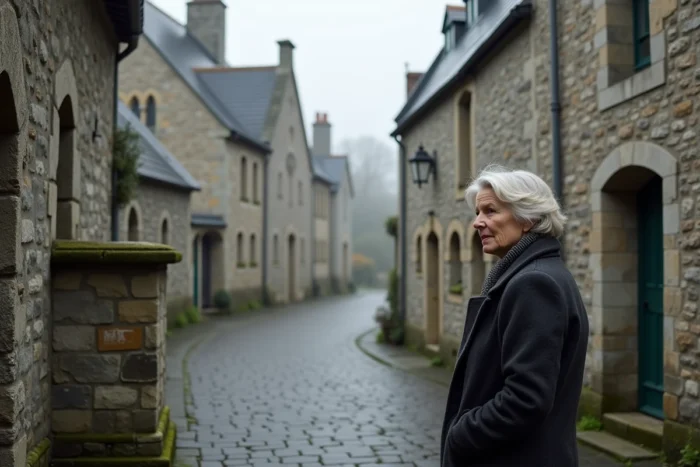
Brocéliande suffers from an excess of mythology in media treatment. The Paimpont forest, its administrative name, is a substantial massif that combines oak groves, ponds, heathlands, and megalithic sites. The Arthurian legends (Barenton fountain, Valley of No Return) attract visitors, but the massif presents ecological and geological interest that goes beyond just the Celtic narrative.
Breton landscapes function as a visible assembly of relief, hydrography, vegetation, and built environment. Brocéliande illustrates this principle: the forest does not exist in isolation; it is articulated with bocage meadows, ancient artificial ponds, and rural buildings made of schist or granite. Reducing this landscape to a “legendary backdrop” erases half of what is there.
What Megalithic Sites Tell Us About the Landscape
The alignments and dolmens present in and around Brocéliande are not mere archaeological curiosities. Their placement follows terrain logics (ridges, high points, proximity to waterways) that testify to an ancient reading of the landscape. The Regional Directorate of Cultural Affairs of Brittany documents these sites as part of its regional archaeological policy.
Breton megaliths are markers of landscape as much as of culture. Their presence indicates particular geographical configurations that Neolithic populations had identified long before modern cadastres.
Pink Granite Coast: Geology and Wild Nature of Trégor
The pink granite of the coastline between Perros-Guirec and Trébeurden results from an erosion process on a granite pluton rich in feldspar. The color varies with light and humidity, from pale beige to deep pink. This is not a common phenomenon: only a few sites in the world exhibit this hue.
The walk along the customs path in this area crosses several atmospheres in a short distance:
- The chaos of Ploumanac’h, where rounded blocks form stacks sculpted by wind and spray, accessible at low tide for close exploration
- The Sillon de Talbert in Pleubian, a tongue of sand and pebbles that extends into the sea for over a kilometer, home to seabirds like oystercatchers
- Milliau Island, accessible on foot at low tide, which offers a panorama of the Bay of Morlaix and a vegetation of wind-swept low heath
These sites illustrate a wild nature shaped by tides and wind, not by tourist development. The ornithological reserves in the area, notably the Sept-Îles, host colonies of puffins, great cormorants, and northern gannets.
Breton Built Heritage: Reading a Village Like a Landscape
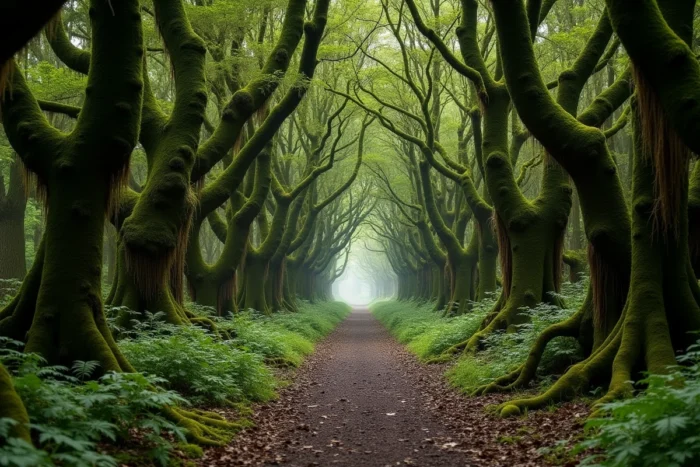
Breton heritage is not limited to parish enclosures and calvaries, however remarkable they may be. The villages of Morbihan, Trégor, or Cornouaille feature local granite buildings whose color and stone size vary from one municipality to another. This variation is not decorative: it directly reflects the geology of the immediate subsoil.
A coastal village built of light granite does not resemble a town in Argoat built of dark schist. Breton buildings are a geological map readable to the naked eye. The slate roofs, ubiquitous, historically come from local quarries, reinforcing this coherence between soil and construction.
Holidays in Brittany: Beyond Beaches and Classified Villages
Family holidays in Brittany benefit from incorporating this reading of the landscape. A walk in Huelgoat forest, with its granite chaos and Silver River, offers as much as a day at the beach. The sunken valleys inland, the canals (Nantes to Brest, Ille-et-Rance), and the high heathlands provide landscapes that most visitors never see.
Some hikers find Argoat more spectacular than the coast, while others believe the coast remains incomparable. These two Bretons function as a whole, and traversing one without the other amounts to reading only half the text.
Breton heritage, whether natural or built, is read while walking. The landscapes of heath, forest, and coastline are not separate categories but facets of the same compact territory, where just a few kilometers are enough to change the atmosphere, geology, and light.