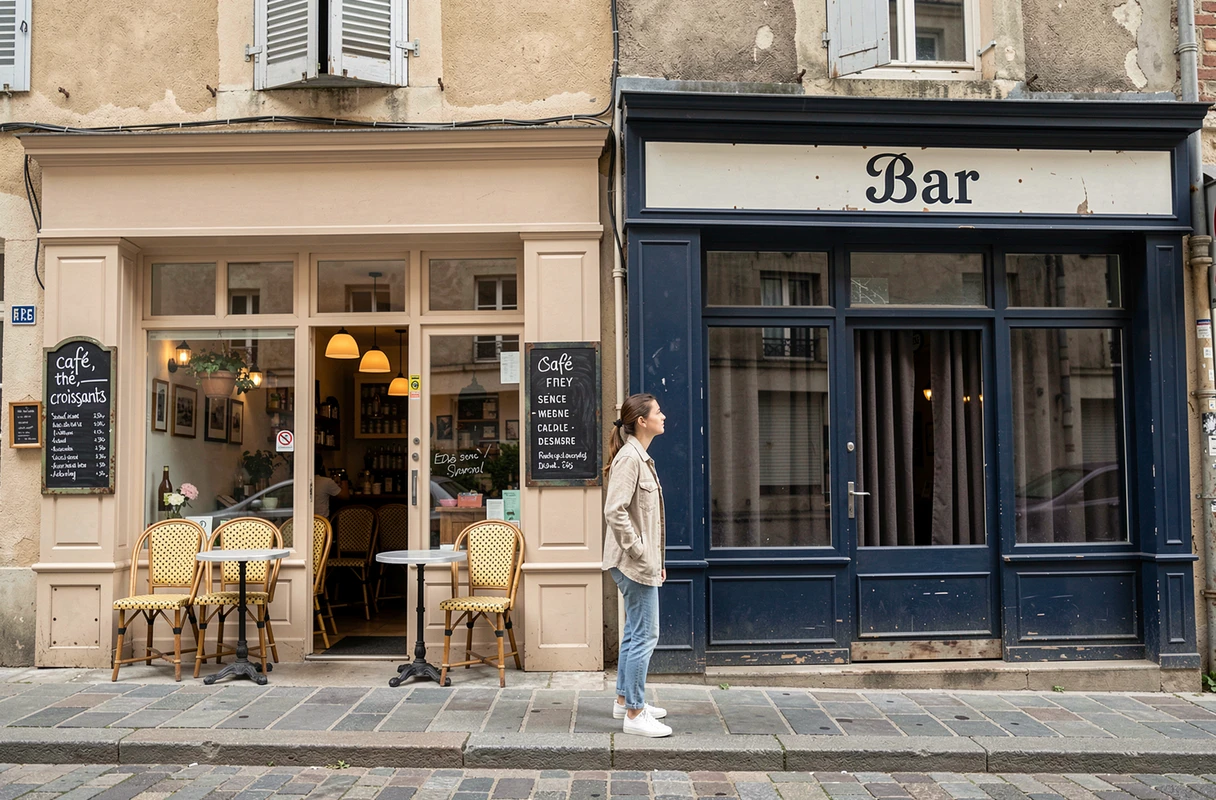
The distinction between a bar and a café does not depend on the ambiance or the furniture. It is based on a specific regulatory framework, a different spatial organization, and a relationship to the counter that shapes the economic model of each establishment.
Drink license: the real regulatory divide
A café, in the French administrative sense, falls under a limited category drink license allowing the sale of non-alcoholic beverages and, in some cases, fermented non-distilled drinks. A bar that serves spirits operates under a more extensive license, which alters its reporting obligations, hours, and display constraints.
The confusion arises from the fact that many establishments combine both functions. A Parisian café that offers a wine and cocktail menu actually holds a bar license. The name on the front does not always reflect the actual administrative category.
We observe that the definition of a bar and a café primarily depends on this legal classification, much more than on customer perception or interior decor. The sale of alcohol on-site imposes specific categories and obligations governed by the public health code.
Counter and spatial organization: what separates the bar from the café
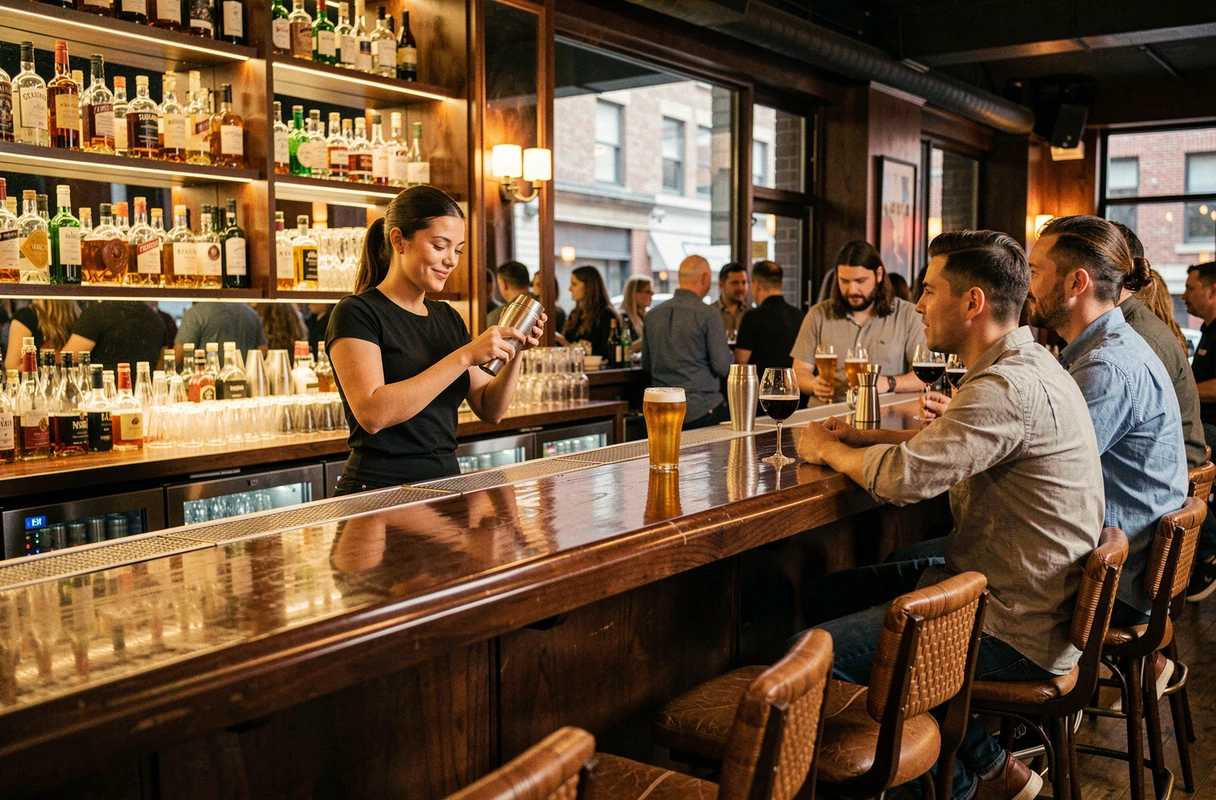
The bar is structured around the counter. It is the focal point of the establishment, where the relationship between the professional and the customer is direct and semi-public. The customer sits facing the bartender, places an order, and observes the preparation. Quick consumption, whether standing or on a stool, remains the dominant mode.
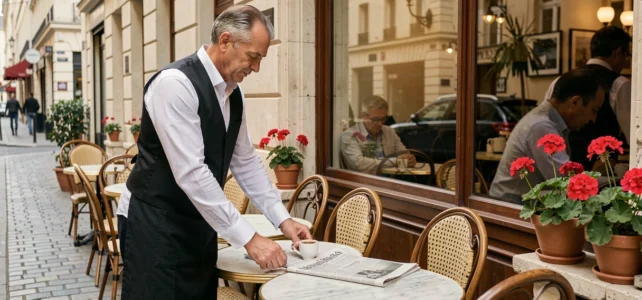
The café, on the other hand, is centered around the table and the room. The counter exists but serves as a passage point, not a place to linger. The logic is one of prolonged seating, reading a newspaper on the terrace, and conversing with friends. The space is designed for customers to settle in.
This difference in spatial organization has concrete consequences on staff, service flow, and profitability per square meter. A bar optimizes its revenue through rapid turnover at the counter. A café relies on the average spend per table and the duration of presence.
The hybrid café-bar model
Hybrid cafés-bars combine hot drinks, alcohol, and sometimes light meals. Their organization varies depending on the time of day: coffee and pastries in the morning, beers and appetizers in the late afternoon, cocktails in the evening. This model requires a dual skill set from the staff and more complex stock management.
Barista and bartender: two professions, two preparation logics
The barista is a specialized profession in its own right, related to the coffee trades. Their expertise focuses on extraction, grinder adjustment, water temperature, pressure, and milk recipes. In a serious café, the barista masters the entire chain, from bean to cup.
The bartender works in a different realm: spirits, bitters, syrups, shaking and mixing techniques. Their competence relies on knowledge of alcohols, taste balances, and presentation at the counter.
- The barista focuses on espresso extraction, milk frothing, and coffee-based recipes, using dedicated equipment (grinder, espresso machine)
- The bartender manages a menu of alcoholic beverages, masters the dosages and pairings, and works behind a counter equipped with pour spouts, shakers, and specific glassware
- In a hybrid establishment, these two roles are sometimes held by the same person, which dilutes specialization and impacts service quality
A barista is not a server who makes coffee. The confusion persists because many establishments do not invest in training or suitable equipment.
Espresso at the counter or coffee in the room: the cultural dimension
In Italy, ordering “a coffee” at the bar means by default an espresso, consumed standing at the counter in under two minutes. The logic is one of quick consumption, al banco, without table service. The price is often different depending on whether one consumes at the counter or seated.
In France, coffee is usually consumed in the room or on the terrace. Ordering an espresso comes with a time to settle in, sometimes with a glass of water. The living space takes precedence over the drink itself. This cultural difference explains why the same word, “café,” sometimes refers to the drink, sometimes to the establishment, and sometimes to a mode of sociability.
Bars in Paris and other large French cities have gradually integrated a quality coffee offering, further blurring the line. The emergence of independent roasters and specialized coffee shops creates a third category, neither a bar nor a traditional café, focused exclusively on the quality of extraction and the traceability of the bean.
Display obligations and consumer rights in cafés and bars
Cafés and bars are required to display drink and food prices both inside and outside the establishment. This obligation includes:
- A list of common beverages with their served volume and prices, all taxes and service included
- The issuance of a bill for amounts over twenty-five euros, with the consumer having the option to request one below this threshold
- The indication that free drinking water can be requested by any consumer
- The prohibition of refusing to serve a simple coffee on the terrace or refusing to replace a drink that is not at the correct temperature
These rules apply equally to cafés and bars. The type of license does not exempt from any display obligation. However, an establishment holding a license allowing alcohol sales must comply with additional signage constraints related to prevention.
The boundary between bar and café is therefore both regulatory, spatial, and cultural. It is reflected in the license, in the arrangement of the counter, and in the way the customer consumes. The name on the façade remains largely decorative.