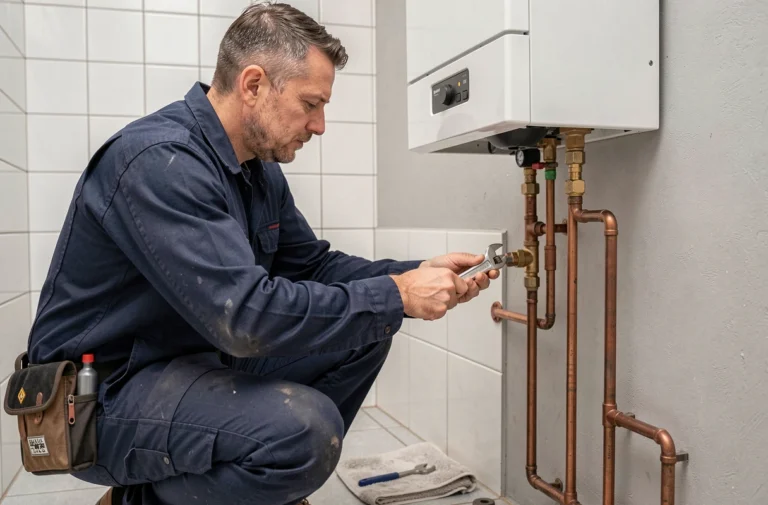
The Bosch trimmer line is not changed in the same way depending on the model. Between classic spool heads, semi-automatic systems, and the IntelliFEED technology introduced in recent models, the procedure varies to the point of making some generic tutorials unusable. Understanding the mechanism specific to your device avoids unnecessary handling and repeated line breaks.
Semi-automatic head, tap and go, or IntelliFEED: identify the Bosch system before touching the spool
Bosch uses several line dispensing technologies depending on the range. Confusing them risks damaging the head or improperly rewinding the line.
On older or entry-level models, the system works in “tap and go” (or “tipp-automatik”): you need to tap the head on the ground while the motor is running to release a few centimeters of line. The internal spool is manual and is reloaded by opening it.
Models like the EasyGrassCut 18V-26 and the EasyGrassCut 26 feature a semi-automatic head. The line advances with each pull of the trigger, without contact with the ground. The spool remains removable, but reloading requires following the winding direction specific to this mechanism.
The UniversalGrassCut 18V-26 goes further with the IntelliFEED system. The line advances automatically, without intervention. No shock to the ground, no dedicated trigger manipulation. This system reduces stops to readjust the length, but the spool is reloaded differently: the line must be inserted without excessive tension for the feed sensor to work correctly.
Before any operation, checking the exact model (reference engraved on the motor housing or on the handle label) allows you to know which guide to follow. A tutorial intended for an ART 26 does not apply to a UniversalGrassCut 18V-26. If you need to change the Bosch trimmer line, this distinction is the first step to validate.
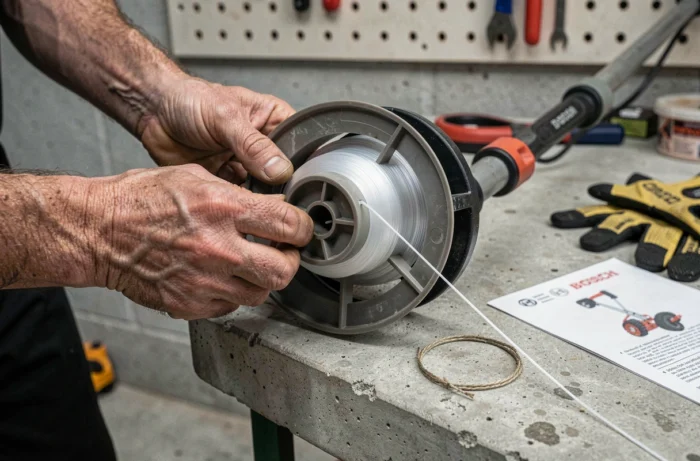
Rewinding the line on a Bosch spool: the method that avoids jams
The majority of line failures (immediate breakage at startup, line that no longer comes out, jamming in the head) come from approximate rewinding. Three technical points make the difference.
Winding direction and line tension
An arrow engraved on the spool indicates the winding direction. Winding in the wrong direction prevents the line from unwinding. The tension must remain consistent: a line wound too tightly jams, while one that is too loose tangles. Maintaining slight thumb pressure during winding is sufficient.
Length of line to prepare
Cutting the correct length before starting avoids excess that creates overlaps in the spool. Bosch spools have a limited capacity, and excess line is the most common cause of jamming. Adhering to the length indicated in the manual for the specific model remains the only reliable reference, as it varies from one reference to another.
Passing the line through the exit eyelet
The line must come out through the notch in the spool and then through the eyelet of the cover. A line improperly engaged in this eyelet will get stuck on the first rotation. Before closing the cover, gently pull on the end of the line to ensure it slides freely.
- Check the direction of the arrow on the spool before each rewinding
- Maintain constant tension during winding to avoid crossed coils
- Pull the line through the eyelet and test the sliding before replacing the cover
- Do not exceed the capacity of the spool: rewinding flush with the maximum edge causes internal friction
Round line, reinforced square line: which profile for which use on a Bosch trimmer
The choice of line is not limited to diameter. The profile of the section (round or square) modifies the cutting behavior and compatibility with the Bosch head.
The standard round line, supplied with most Bosch models, is suitable for regular lawn maintenance. It wears evenly and easily passes through semi-automatic spools.
Reinforced square nylon lines offer a cleaner cut on dense grasses. Their angular section slices through vegetation instead of whipping it. However, they generate more friction in the cutting head, which can accelerate wear on the dispensing mechanism in entry-level models.
A point of caution: not all square lines are compatible with Bosch spools. A diameter that is too large prevents proper winding and puts stress on the exit eyelet. Adhering to the maximum diameter indicated by Bosch for each reference is the only guarantee of compatibility. A good quality third-party line works, but only if its dimensions match the spool specifications.
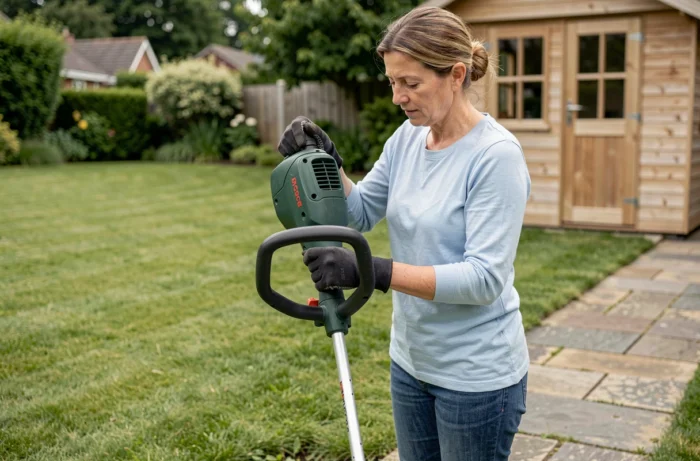
Bosch spool cover: the reassembly that causes problems
Reassembling the cover is the step where most users waste time. On Bosch trimmers, the cover is secured by clipping with a quarter turn or by direct fitting depending on the model.
On the ART series (ART 26, ART 30), the cover locks by pressing and then turning in the direction indicated by the molded markers. Forcing without aligning the tabs breaks the retaining clips, a low-cost spare part but which immobilizes the tool while waiting for replacement.
On the EasyGrassCut and UniversalGrassCut series, the locking system is simpler (axial pressure), but the spool must be perfectly in place in its housing. A slight misalignment of the spool prevents the cover from snapping fully, which causes it to detach during use.
- Align the visual markers (arrows or dots) of the cover with those of the housing before pressing
- Never force the locking: if the cover resists, the spool is likely misaligned
- Check that the line does not pass between the cover and the housing, which would prevent complete closure
Replacing the line on a Bosch trimmer takes a few minutes once the mechanism of its head is well understood. The difficulty lies not in the action itself, but in applying the correct procedure to the right model. Keeping the exact reference of the device on hand before each intervention remains the most useful reflex.