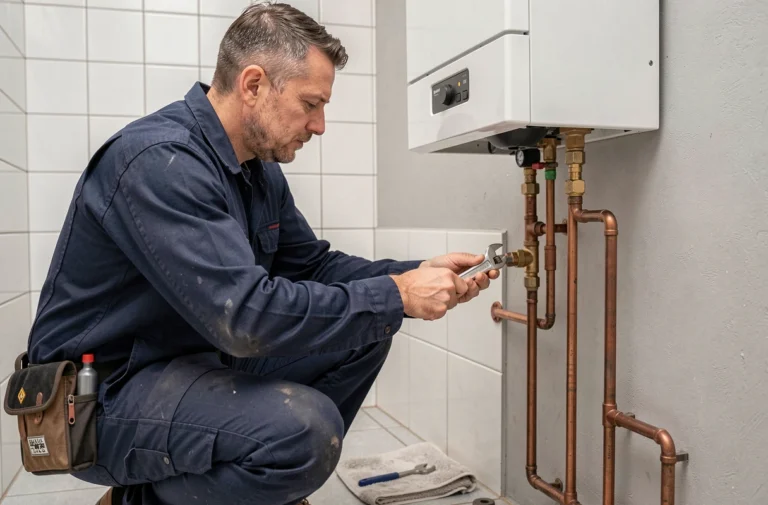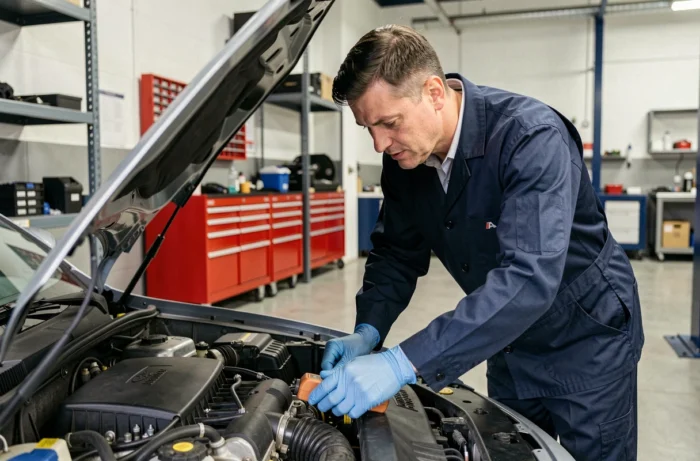
The European directive on the right to repair, applicable since July 31, 2026, reshuffles the cards of the automotive after-sales market. Access to spare parts, technical data, and diagnostic tools outside the manufacturer’s network now has a binding legal framework for each member state. This change profoundly alters the way we approach automotive services, from simple maintenance to managing an electric vehicle.
Right to automotive repair: what the 2026 European directive changes
The right to repair transposed into national law requires manufacturers to provide repair information, spare parts, and diagnostic tools to independent garages. Until now, access to this data has been uneven across brands and networks.
Independent repair is gaining real ground. Compatible parts, used parts, and even certain 3D-printed components become usable, provided they comply with safety standards and respect intellectual property. For body parts and common consumables, this is a direct lever for reducing maintenance costs.
In practice, this means that an independent mechanic can now work on recent vehicles without facing software locks or refusals to sell parts. To find information on Déclic Auto and all in car, we recommend cross-referencing several sources before choosing a service provider or a used vehicle.
Electric vehicle maintenance: the real areas of oversight
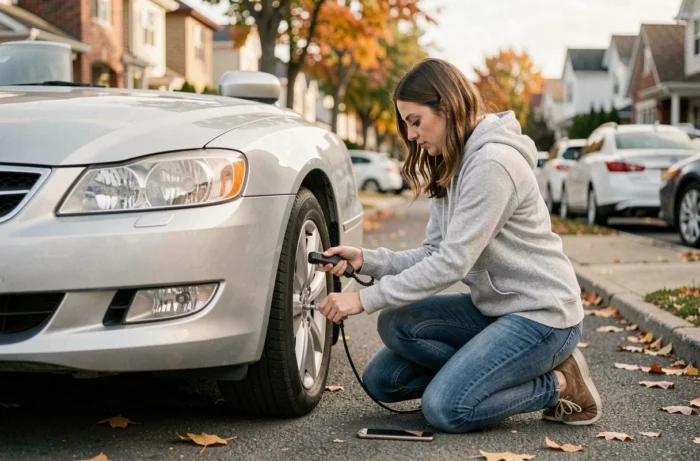
The idea that an electric vehicle requires no maintenance is a misleading shortcut. Field reports show that software and thermal monitoring remain critical for these powertrains.
We observe several areas often overlooked by electric vehicle owners:
- The high-voltage battery cooling system requires regular checks of the coolant, as its degradation accelerates cell aging
- The brake fluid absorbs moisture even in a vehicle that primarily brakes through energy recovery, necessitating periodic replacement
- The geometry and wear of tires are accelerated due to instant torque, and poor alignment significantly degrades range
- Software updates to the BMS (battery management system) sometimes correct calibration defects that affect the actual capacity of the battery
For a thermal vehicle, one thinks of oil changes and filters. For an electric vehicle, charging habits matter as much as mechanical operations. Avoiding daily 100% charges, limiting repeated fast charging, and favoring a charge range between 20 and 80% extends battery life far more effectively than an annual service.
Automotive technical inspection: anticipate rather than endure
The technical inspection remains the mandatory appointment that concentrates the most avoidable re-inspections. The majority of major failures detected concern points that the driver can check themselves or have corrected in advance.
Three areas account for most refusals:
- Lighting, with burnt-out bulbs or misaligned headlights, often correctable in a few minutes
- Braking, where worn pads or a warped disc can be detected well before the inspection center visit
- Pollutant emissions, linked to a clogged particulate filter or an end-of-life catalytic converter
A pre-inspection at an independent garage costs less than a re-inspection. We recommend scheduling this check at least three weeks before the deadline, to allow time to order a part if necessary.
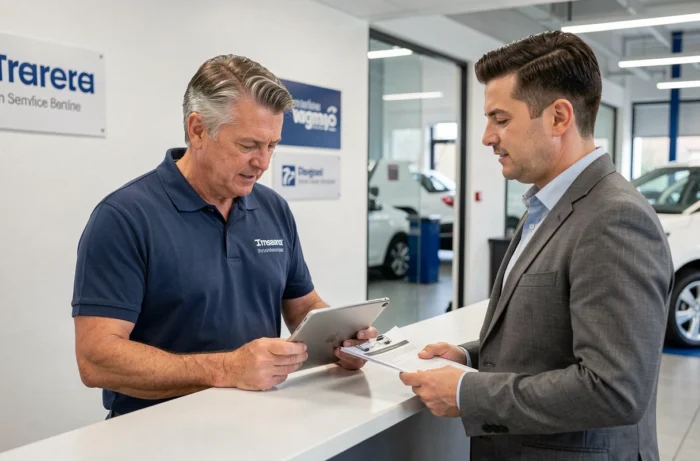
Choosing an automotive service provider: manufacturer network or independent garage
During the manufacturer warranty period, servicing at an authorized network remains the simplest way to maintain rights. The European directive reminds us that off-network maintenance can no longer be a reason for warranty refusal, provided that operations are carried out according to the manufacturer’s recommendations with compliant parts.
After the warranty, the choice depends on the type of intervention. For routine operations (oil changes, filters, brakes, tires), a well-equipped independent garage often offers a better quality-price ratio. For interventions on automatic transmissions, hybrid systems, or diagnosing complex electronic failures, access to manufacturer diagnostic tools remains an advantage of the official network.
The discriminating factor is not the garage’s status, but its ability to access the vehicle’s technical data. With the transposition of the right to repair, this access is gradually normalizing, reducing the gap between the two circuits.
Automotive services and fuel: adapting driving to the engine
The type of fuel and driving style directly influence maintenance frequency. A diesel engine subjected to short trips accumulates soot in the particulate filter much faster than a vehicle that regularly drives on the highway.
On recent turbo gasoline engines, the quality of engine oil determines the longevity of the turbocharger. Using oil of a specification lower than that recommended by the manufacturer accelerates the coking of bearings and supply lines.
For hybrid vehicles, the alternating management between thermal and electric motors modifies the classic intervals. The thermal engine runs less often, but repeated cold starts put more strain on the lubrication circuit. Maintaining these vehicles requires careful reading of the manufacturer’s manual rather than a copy of habits acquired on a conventional engine.
The used car market now incorporates these parameters into the evaluation of a vehicle. A complete maintenance history, with invoices detailing the operations and parts used, weighs as much as the displayed mileage during a transaction between individuals or with a professional.