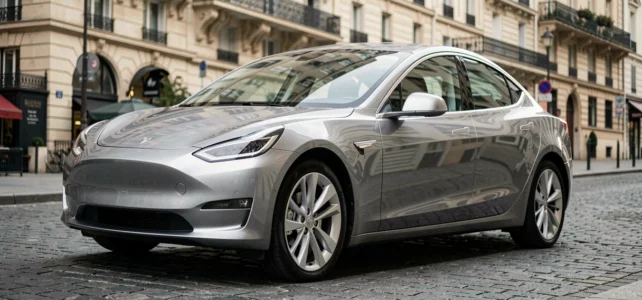
Choosing a car in 2024 means weighing motorization, budget, and rapidly evolving regulatory constraints. The market offers more accessible electric models, better-calibrated hybrids, and combustion vehicles whose lifespan in urban areas is decreasing year by year. What measurable criteria can help differentiate these options before signing an order form?
ZFE Risk and Crit’Air Sticker: The Filter That Guides Overlook
Most comparisons focus on the list price or range. They overlook the parameter that can render a vehicle unusable in the short term: low emission mobility zones (ZFE-m).
Since January 1, 2025, urban areas with more than 150,000 inhabitants must have established a ZFE-m, in accordance with the Climate and Resilience law. The restrictions primarily target Crit’Air 3 vehicles in areas still exceeding pollution thresholds.
In Lyon, Crit’Air 3 vehicles have been banned and fined since July 1, 2026, with a fixed fine of €68 and an announced rollout of automatic plate reading. In Greater Paris, Crit’Air 3 vehicles are restricted on weekdays (Monday to Friday, 8 AM to 8 PM) since January 2025, although systematic fines have been postponed.
In practical terms, buying a diesel classified as Crit’Air 3 or an older gasoline vehicle in 2024 exposes one to a loss of usability in urban areas within months. This is a disqualifying criterion, not a secondary regulatory detail. Manufacturer sheets on the Motor X Club cars site allow verification of the Crit’Air classification associated with each model before any commitment.

2024 Motorization Comparison: Cost, Use, and Restrictions
The choice of motorization depends on three related variables: acquisition cost, driving profile, and access to city centers. The table below summarizes the differences based on available data in the French market.
| Criterion | Recent Gasoline | Recent Diesel | Plug-in Hybrid | Electric |
|---|---|---|---|---|
| ZFE Access (2025-2026) | Crit’Air 1: allowed | Crit’Air 2: allowed for now | Crit’Air 1 or 2: allowed | Crit’Air 0: no restrictions |
| Fuel/Energy Cost | Medium | Slightly lower than gasoline | Low in electric mode | The lowest |
| Long-Distance Range | High | High | Variable depending on the battery | Improving, depends on the model |
| Depreciation at Resale | Moderate | High (ZFE risk) | Moderate | Rapid on older models |
| Mechanical Maintenance | Standard | More expensive (DPF, AdBlue) | Mixed | Reduced (no clutch, fewer brakes) |
Recent diesel (Crit’Air 2) remains allowed in current ZFE. However, there is no guarantee that this tolerance will last beyond 2026-2028, as restriction schedules are tightening in phases. A buyer planning to keep their vehicle for more than five years is taking a measurable risk.
What Diesel Depreciation Reveals
The higher depreciation of diesels in the used market directly reflects buyer anticipation regarding ZFE. A Crit’Air 3 diesel resold in 2025 will find it difficult to attract buyers in a large urban area. This phenomenon drives down residual value, including for Crit’Air 2 vehicles whose restriction horizon is approaching.
SUV, City Car, or Sedan: Which Segment for Which Profile in 2024
The SUV segment continues to dominate sales, but this popularity does not mean it suits all uses. The choice of size must meet specific constraints.
- Electric or Hybrid City Car: suitable for short daily trips, easy to park, low consumption. Renault offers several models in this segment with constantly improving ranges.
- Compact SUV: versatile for families, suitable for both road and city, but approximately a quarter more consumption compared to an equivalent sedan.
- Recent Thermal Sedan or Compact: relevant for high-mileage drivers who regularly travel long distances outside urban areas, provided they aim for a Crit’Air 1.
The often-overlooked criterion is parking. C or D segment SUVs pose concrete problems in older underground parking lots, common in French city centers. An unsuitable size generates indirect costs (outdoor parking subscriptions, scratches, lost time).

2024 Automotive Budget: Purchase Price vs. Total Cost of Ownership
The price displayed at the dealership represents only a fraction of the actual cost. The total cost of ownership over five years radically changes the ranking of motorizations.
An electric vehicle costs more to purchase, but the energy consumed per kilometer remains significantly cheaper than gasoline or diesel. Mechanical maintenance is also lighter: no conventional engine oil change, no clutch, brake pads used less often thanks to regenerative braking.
Conversely, a plug-in hybrid combines two powertrains, which can increase maintenance bills after the warranty period. The economic benefit of a plug-in hybrid only materializes if the battery is actually charged daily. A plug-in hybrid used without ever plugging in consumes more than a pure combustion vehicle due to the extra weight of the battery.
The Trap of Decreasing Environmental Bonus
Purchase aids for electric vehicles have been gradually reduced. A decreasing bonus makes it more difficult to offset the price difference with combustion vehicles, which lengthens the payback period. Checking the exact amount of the bonus at the time of ordering, not during the search, avoids unpleasant surprises.
The used electric market also deserves attention. The first mass-produced models are arriving on the secondary market with marked depreciation. The battery remains a point of vigilance: a battery health certificate (State of Health) above 80% indicates a capacity still usable for several years of regular use.
The final decision rests on three data points: annual mileage, the possibility of charging at home, and the expected duration of ownership. A buyer who drives less than 15,000 km per year and can charge at home gets the most out of an electric vehicle. For other profiles, the hybrid or Crit’Air 1 gasoline remains the most straightforward compromise in 2024.